What is an RFQ? RFP vs RFQ vs RFI explained for suppliers
RFQ stands for Request for Quotation. Learn what it means, how it differs from an RFP and RFI, and what a winning supplier response looks like, with examples.
RFQ stands for Request for Quotation. Learn what it means, how it differs from an RFP and RFI, and what a winning supplier response looks like, with examples.
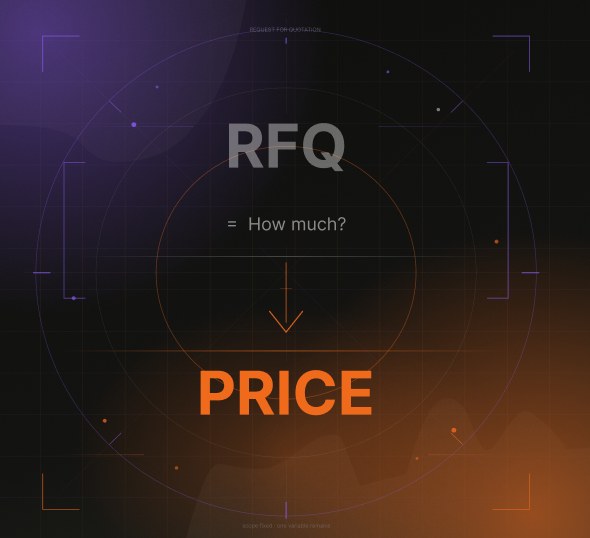
RFQ stands for Request for Quotation, sometimes also called Request for Quote.
It is a formal procurement document issued by a buyer to one or more suppliers, asking them to submit a price for a clearly defined product or service. The scope, specifications, quantities, and delivery requirements are already set. The buyer isn't asking how you'd solve the problem. They already know what they want. They're asking: how much, by when, and on what terms?
An RFQ lands in your inbox. You have 48 hours to respond. The scope is fixed, the format is rigid, and the buyer is comparing your quote side by side with three competitors.
This is not an RFP. The rules are different.
Understanding the difference between an RFQ, an RFP, and an RFI isn't just terminology. It determines how much effort you invest, what you write, and how you price. Get it wrong and you either over-engineer a simple quote or under-deliver on a complex bid.
This guide explains exactly what an RFQ is, how it differs from an RFP and RFI, and what a strong supplier response looks like in each case.
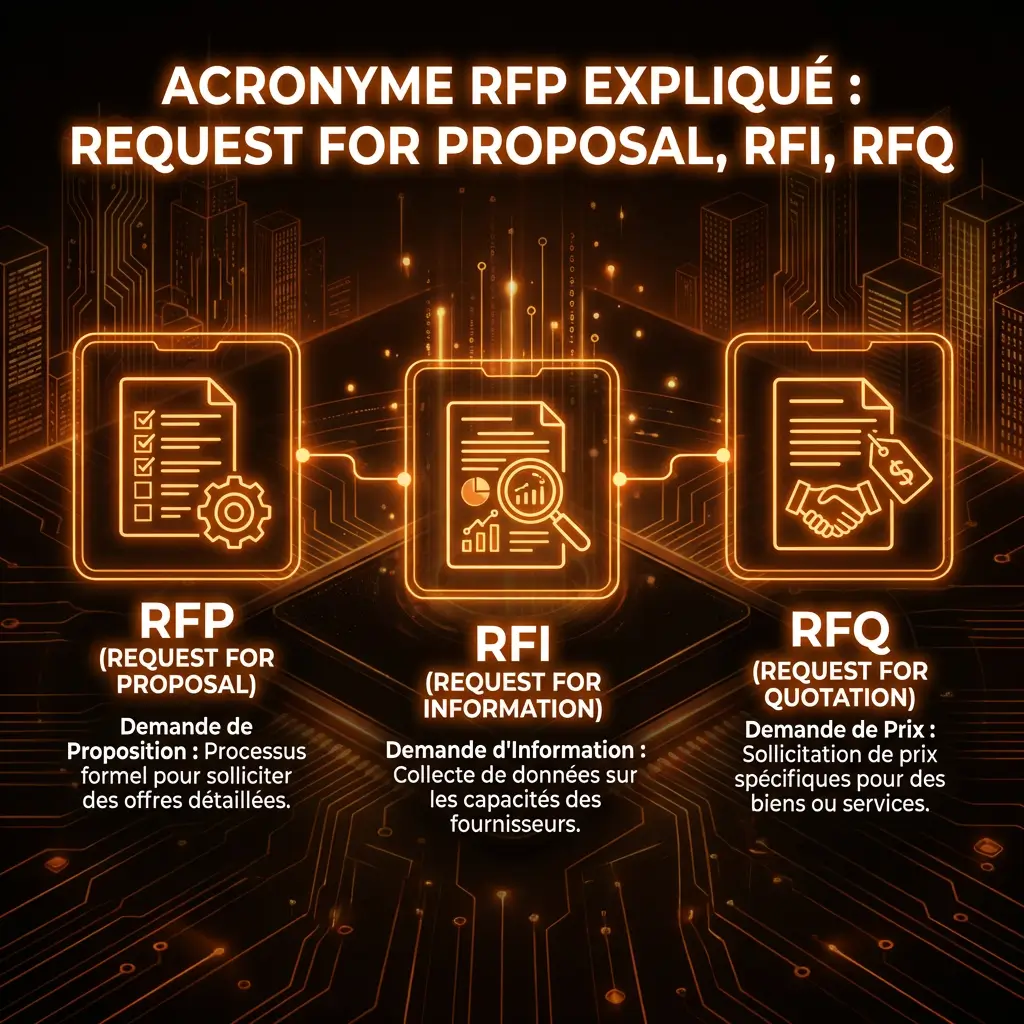
These three documents appear at different stages of the procurement cycle and demand fundamentally different responses.
| RFI | RFP | RFQ | |
|---|---|---|---|
| Stands for | Request for Information | Request for Proposal | Request for Quotation |
| Buyer's goal | Map the market | Evaluate solutions | Compare prices |
| Scope defined? | No | Partially | Yes, fully |
| What they want | Your capabilities | Your solution + methodology | Your price + terms |
| Decision factor | Fit and credibility | Quality, approach, price | Price, compliance, delivery |
| Typical response length | 2–10 pages | 20–100+ pages | 1–5 pages |
| Stage in cycle | Early, longlist | Mid, shortlist | Late, final selection |
| Mistake to avoid | Overselling too early | Generic non-tailored response | Underpricing to win |
The simplest way to remember it:
For a deeper look at where each document fits, see our guide on the RFI, RFP, RFQ differences.
A buyer issues an RFQ when the scope is fixed and price is the primary selection criterion. This typically happens in three situations:
Standardised or repeat purchases. The buyer has bought this before and knows exactly what they need: quantities, specs, delivery windows. They're looking for the best price among qualified suppliers.
After an RFP process. The buyer has already evaluated solutions through an RFP, selected a preferred approach, and now needs firm pricing before awarding the contract. For longer-form deals, see how Tenderbolt handles RFPs.
High-volume, lower-complexity procurement. Manufacturing, distribution, and supply chain teams issue RFQs constantly for components, raw materials, logistics services, and anything with defined specifications and regular purchasing cycles.
An RFQ document generally includes:
The more detailed the RFQ, the more comparable the responses. Which is exactly what the buyer wants. A well-structured RFQ leaves very little room for interpretation.
Unlike an RFP, where creativity, methodology, and storytelling matter, an RFQ response wins on clarity, accuracy, and competitiveness.
Match the format exactly. If the buyer provides a pricing template or Excel grid, use it. Submitting your own format signals that you haven't read the document carefully and makes comparison harder for the evaluator.
Be precise on every line. Vague or conditional pricing ("approximately €X depending on scope") will be ignored in favour of a supplier who gave a clear number. If you have assumptions, state them briefly and separately. Don't bury them in the price.
Price for the right margin, not just to win. The most common mistake in RFQ responses is underpricing to secure the order, then renegotiating at delivery. Buyers notice. It damages trust and your chances of being invited back.
Comply with every requirement. An RFQ is often a compliance exercise before it's a price comparison. If you can't meet a specification, delivery date, certification, or minimum quantity, say so clearly upfront. A response that overpromises and underdelivers is worse than a polite decline.
Keep it concise. An RFQ response is not the place for company background, case studies, or methodology. Stick to what was asked.
A software company responding to an RFQ for IT hardware might receive a document with 12 line items:
| Item | Specification | Qty | Unit price | Total | Delivery |
|---|---|---|---|---|---|
| Laptop | 16GB RAM, 512GB SSD, 15" | 50 | €1,240 | €62,000 | 15 working days |
| Docking station | USB-C, 3× USB, HDMI | 50 | €185 | €9,250 | 15 working days |
| Extended warranty | 3-year on-site | 50 | €210 | €10,500 | N/A |
| Total | €81,750 |
Assumptions: Prices valid 30 days from submission. Delivery to single site. Volume discount of 5% applicable if order confirmed within 10 working days.
In complex procurement, buyers typically run all three in sequence: RFI → RFP → RFQ.
The RFI maps the market and builds the longlist. The RFP evaluates solutions and builds the shortlist. The RFQ gets firm pricing from the shortlisted suppliers before final award.
Not all procurement follows this sequence. For standardised purchases, buyers often skip straight to RFQ. Understanding where you are in the sequence changes your response strategy entirely.
The challenge with RFQs isn't understanding what to write. It's doing it accurately and at volume. Dedicated RFQ automation software like Tenderbolt's AI proposal generator maps each line item against your product catalogue, past quotes, and approved pricing logic, returning a structured draft response traceable to source. Average time saved: 70% per RFQ response.
Tenderbolt analyses the document, maps requirements to your knowledge base, and generates a first draft in minutes, traceable to source, ready for your team to review. Visit /contact to see it run on your own RFQs.
Contact us now