Proposal Writer: role, skills, salary and AI tools
Discover the role of a proposal writer: key skills, career paths, salary benchmarks and AI tools to boost performance.
Discover the role of a proposal writer: key skills, career paths, salary benchmarks and AI tools to boost performance.
A proposal writer is one of the most strategically valuable professionals in any organisation that competes for contracts through tenders. Every RFP response, every public tender, and every vendor questionnaire that leaves a company reflects the quality of the person or team who wrote it. Tenderbolt is built specifically to support this function, giving proposal writers the tools to produce stronger responses in less time. Whether you are encountering the role for the first time, weighing how to structure a proposal team, or looking to scale your workflow with AI, this guide covers every dimension of the proposal writer role: responsibilities, skills, salary benchmarks, career paths, and tooling.
A proposal writer is a professional responsible for creating persuasive, compliant, and well-structured responses to RFPs, public tenders, grant applications, and vendor questionnaires. The role sits at the intersection of project management, communication, technical writing, and commercial strategy. In practice, a proposal writer coordinates input from subject-matter experts (SMEs), turns complex technical content into clear and convincing language, and makes sure every submission answers the client's requirements precisely and on time.
The core responsibilities of a proposal writer include:
It is worth stressing that a proposal writer is not simply a writer. They are the orchestrator of the entire response process, accountable for both writing quality and the integrity of the compliance checklist.

With the role defined, the skill requirements follow logically from its demands. A strong proposal writer combines writing excellence with project-management discipline, commercial sense, and the interpersonal skills needed to extract value from expert interviews under deadline pressure.
The essential skills for a proposal writer:
On top of this, fluency with proposal-management software is increasingly expected. Certification from the Association of Proposal Management Professionals (APMP) is the most recognised professional credential in the field and is valued by employers across industries.
Beyond the general definition, the proposal writer role varies significantly by organisational context and sector. Understanding these variations matters both for professionals weighing the role and for organisations deciding how to structure their proposal function.
In a B2B technology or professional-services company, the proposal writer usually sits within the presales or business-development team, working closely with sales leads and solution architects. In a construction or infrastructure company, they operate inside a formal bid-management function governed by public-procurement regulations. In a consulting firm, the proposal writer may also own unsolicited proposals and client-facing marketing material.
In concrete terms, the differences by context:
As a result, a proposal writer who performs across all three contexts is a genuinely rare and valuable professional, one who understands that the rules of persuasion change depending on who the evaluator is and what they are evaluating.

Becoming a proposal writer does not follow a single, prescribed academic path. The role attracts professionals from varied backgrounds, including journalism, marketing, technical writing, law, and project management. What sets strong candidates apart is not a specific degree but a demonstrated combination of writing quality, organisational discipline, and commercial sense.
Common backgrounds for a proposal writer:
The recognised career progression in proposal writing typically moves from proposal coordinator (administrative support, formatting, compliance tracking) to proposal writer (writing ownership), and then to proposal manager (full process ownership and team leadership). The APMP offers a structured certification path from Foundation to Professional, providing recognised professional accreditations that employers running large tender-response operations value.
According to Indeed and LinkedIn data (2024), most proposal writer job postings require between two and five years of experience in writing or bid management, with APMP certification listed as a preferred qualification in around 40% of senior roles.
With the career path established, salary is the next practical consideration for professionals weighing or building the proposal writer role. Compensation varies significantly by geography, sector, seniority, and organisation size, but clear benchmarks are available from aggregated employment data.
According to salary data from Indeed (2024), proposal writer pay in the major markets breaks down as follows:
The proposal writer function is in strong demand across every sector where competitive tendering is the main route to revenue. According to APMP research (2024), organisations with mature proposal functions win 25 to 40 percentage points more tenders than those without. This performance gap drives continued employer investment in the function, supporting salary growth and increasing the strategic value placed on experienced proposal writers within commercial organisations.
| Role | Core responsibilities | Key skills required | Typical experience | France salary range (2024) |
|---|---|---|---|---|
| Proposal coordinator | Formatting, compliance tracking, document assembly | Attention to detail, organisation, deadline management | 0-2 years | €30,000-38,000 |
| Proposal writer | Writing, SME interviews, per-bid content strategy | Persuasive writing, technical understanding, communication | 2-6 years | €45,000-60,000 |
| Proposal manager | Full process ownership, team leadership, strategy | Project management, stakeholder management, bid strategy | 6+ years | €65,000-80,000 |
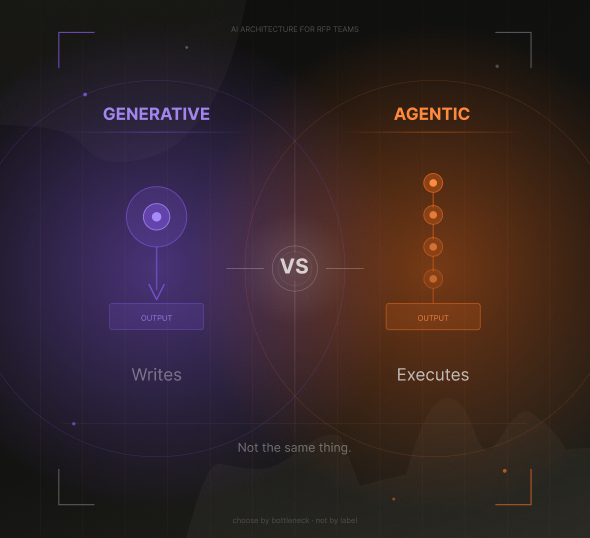
With salary and career path mapped, the most important operational shift for any proposal writer in 2026 is the integration of AI into the response workflow. The proposal writer function has historically been one of the most time-intensive in a commercial organisation: a single complex tender response typically takes 40 to 80 hours of coordinated work across writing, review, and assembly. AI does not replace the proposal writer, but it fundamentally changes how that time is spent.
At Tenderbolt, we see directly that proposal writers who adopt AI-powered software spend the majority of their time on strategic sharpening, personalisation, and review rather than on generating first drafts. In concrete terms, AI transforms the proposal writer workflow by:
On top of this, software like Tenderbolt lets proposal writers handle a significantly higher volume of simultaneous bids without a proportional increase in workload. Teams using Tenderbolt cut their average response time by up to 70%, which translates directly into more bids submitted and a stronger commercial pipeline.

Beyond AI writing assistance, a well-equipped proposal writer relies on a defined software stack covering each phase of the proposal lifecycle. The right tools reduce manual effort, improve document quality, and create a scalable process that does not depend on individual heroics under deadline pressure.
The main tool categories for a proposal writer:
It is worth noting that the highest-impact investment a proposal writer or their organisation can make is in AI-powered software that brings the content library, writing assistance, and workflow management together in one place. Fragmented tooling creates a coordination burden that cancels out the time savings of any individual tool.
The proposal writer role is one of the highest-leverage commercial functions in organisations that compete for contracts at scale. In 2026, the professionals and teams who master it combine writing excellence, process discipline, and AI tooling into a competitive advantage that compounds with every bid submitted. Tenderbolt gives proposal writers the software to operate at that level, from AI-assisted first drafts to pre-submission compliance checks, across private RFPs, public tenders, and vendor questionnaires. Book a demo to see how it supports your proposal team's performance.
A proposal writer spends the day analyzing incoming tender documents, drafting proposal sections, running interviews with subject-matter experts, managing internal review cycles, and preparing final submissions on deadline. In practice, a proposal writer works on several bids at once, each at a different stage of the response cycle. The role demands as much project-management discipline as writing skill, since coordinating contributors, tracking deadlines, and maintaining compliance are as critical as producing convincing content. In organisations using AI tools like Tenderbolt, first-draft generation is largely automated, letting the proposal writer focus on strategic personalisation and review quality.
A proposal writer generally needs a degree in humanities, communication, business, marketing, or a technical discipline relevant to their sector, though no single qualification is universally required. The most valued credential in the profession is APMP certification from the Association of Proposal Management Professionals, which offers a recognised progression from Foundation to Professional. Beyond formal education, employers consistently prioritise demonstrated writing quality, tender-response experience, and fluency with proposal-management software. A master's degree is common among senior proposal writers in competitive sectors.
A proposal writer earns €45,000 to €60,000 at mid-level in France, with senior roles in technology and professional services reaching €70,000 to €80,000. In the United Kingdom, median salaries run from £40,000 to £55,000. In the United States, mid-level salaries sit between $72,000 and $95,000, with senior roles reaching $110,000 to $130,000. These figures reflect 2024 market data from Indeed and LinkedIn. Salary growth in this field is driven by rising demand for tender-response capability, combined with the relative scarcity of experienced proposal writers.
Yes, becoming a proposal writer is an excellent career choice for professionals who combine writing aptitude, organisational discipline, and commercial curiosity. The role is in steady demand across technology, professional services, public works, defence, and healthcare. According to APMP (2024), organisations with dedicated proposal functions win 25 to 40 percentage points more tenders than those without, creating durable employer demand for skilled proposal writers. The career path is well defined, progressing from coordinator to proposal writer and then to proposal manager.
A proposal writer is primarily responsible for writing and producing proposal content: drafting sections, coordinating subject-matter-expert input, and guaranteeing document quality. A proposal manager owns the entire bid process end to end, including the bid/no-bid decision, the win strategy, team leadership, stakeholder management, and performance analysis. In smaller organisations, a senior proposal writer may cover both functions. APMP certification reflects this distinction with separate competency frameworks for each level.
AI is changing the proposal writer role by automating the most time-intensive and repetitive tasks in the response workflow, notably document analysis, first-draft generation, and compliance checking. Software like Tenderbolt analyzes the entire tender, maps every requirement, and generates section-level first drafts from the organisation's content library, reducing time spent on analysis and initial drafting by up to 70%. This shift moves the proposal writer's value contribution from volume production to strategic sharpening: tailoring content to the specific evaluator, strengthening the win argument, and making sure the final submission is both compliant and genuinely persuasive.
Contact us now