





RFP / RFI

From a complex RFP to a structured, winning response.

Tenderbolt takes your team from analysis to submission on every RFP and RFI: reading the documents, structuring the response, sourcing every answer from your knowledge base, and keeping the team coordinated until the file goes out.

Trusted by 200+ SMEs, mid-market, and enterprise teams.

  • AFPA
  • APAVE
  • Crit
  • Diot Siaci
  • France Sécurité
  • Generix
  • Geolithe
  • Kelio
  • Lefebvre-Dalloz
  • Manutan
  • PLG
  • Roux TP
  • Sapian
  • Sigma RH
  • Training Orchestra

A complex RFP should not mean starting from a blank page every time

The same tender document, two very different responses.

Without Tenderbolt

  • Hours reading a 200-page document before writing a single word

  • Answers sourced from memory, old emails and last year's proposal

  • Generic AI invents confident answers that are not in your documents

  • The presales team stretched across five bids at the same time

  • No visibility on which sections are done, reviewed or at risk

  • Last-minute scramble when a key expert is unavailable

With Tenderbolt

  • The full tender pack analysed and summarised in seconds

  • Every answer drawn from your own documents, traceable to the source

  • Gaps flagged before submission, never silently invented

  • Sections assigned to the right contributor from day one

  • Real-time visibility on progress, reviews and what is still open

  • A submission-ready response before the deadline, not on the night of

Every step of an RFP or RFI response, covered

Less time on the parts of the process that consume hours without adding value. More time on the arguments and strategy that actually win.

Analyse the tender documents

Drop the RFP or RFI documents and get a structured summary in seconds: scope, budget, deadlines, evaluation criteria, penalties, mandatory requirements. The information that decides whether and how to respond, available before the team spends a single hour.
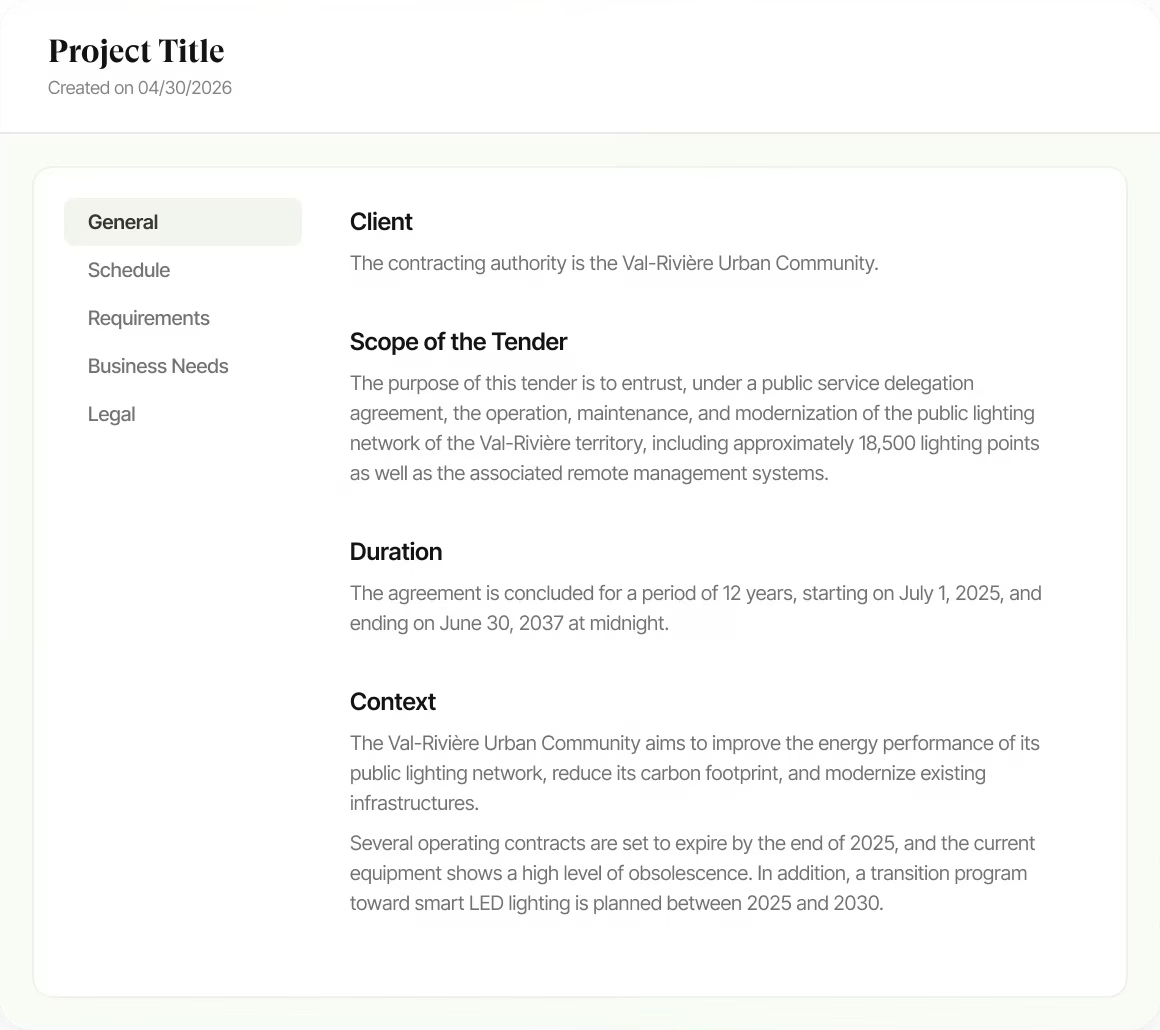
    Tender analysis interface showing extracted client, scope, duration and context fields

    Go/No-Go decision on shared criteria

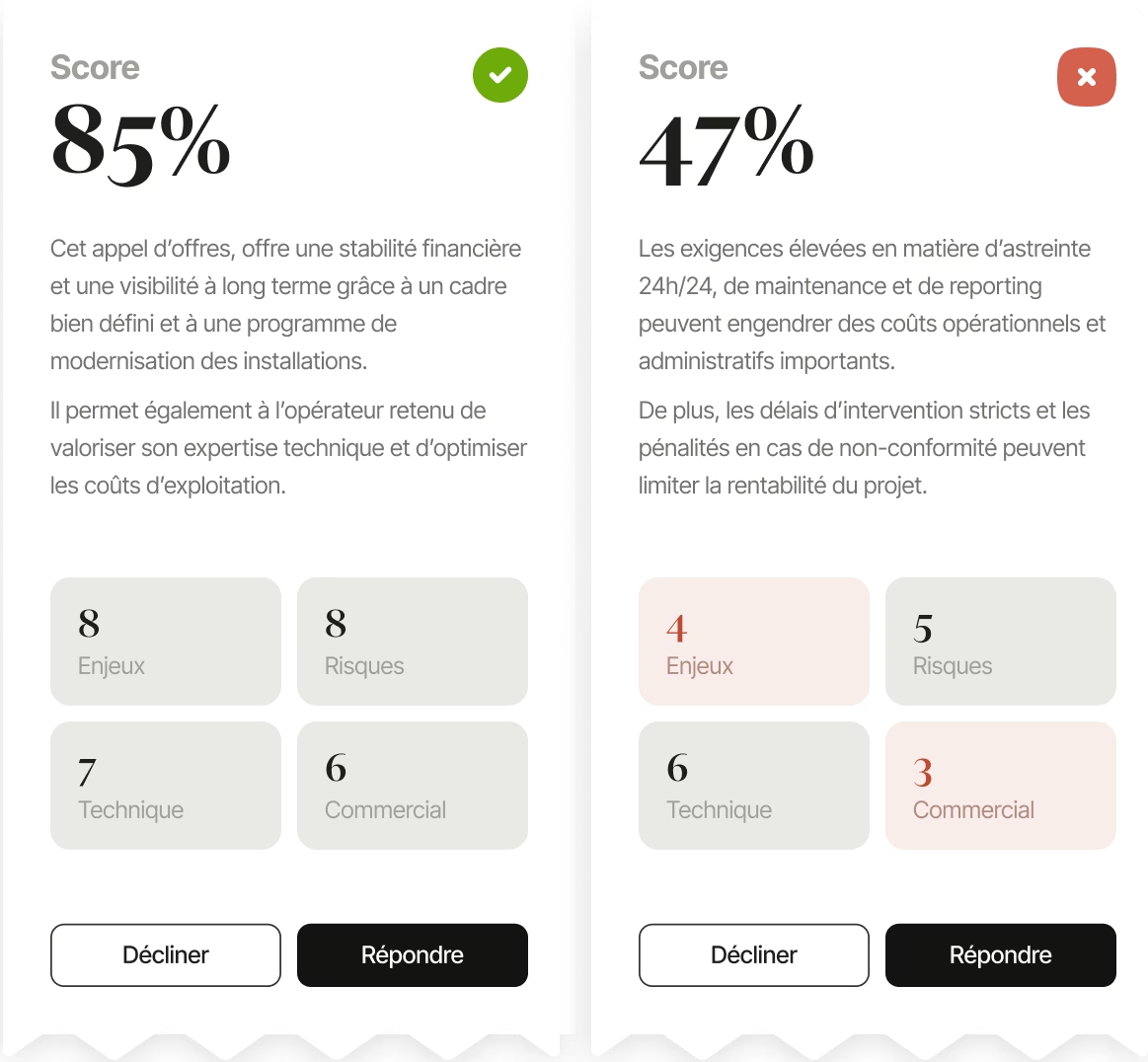
    Tenderbolt generates a scored Go/No-Go grid covering strategic fit, budget, deadline, competitive positioning and risk. The decision is made by the whole team on the same information, not in a corridor conversation.

      Scored go/no-go decision grid in Tenderbolt

      Source every answer from your knowledge base

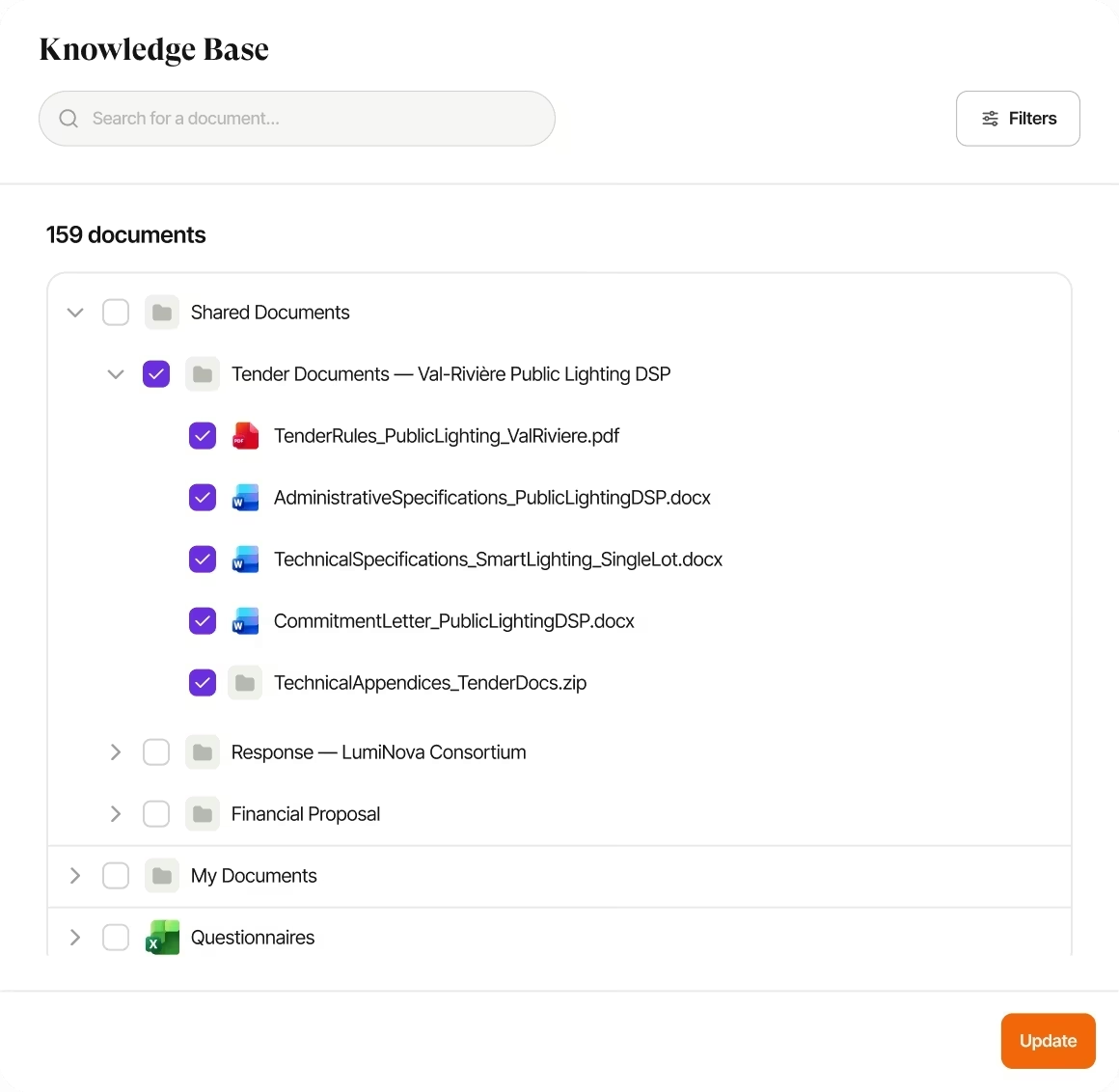
      Every question in the RFP or RFI is answered from your own documents: past proposals, technical sheets, certifications, policies. Each answer is linked to the source it came from. Where the source is incomplete, a Partial Answer flag tells you. Where it does not exist, an Unknown flag tells you. Nothing is invented.

        Knowledge base interface listing tender documents with checkboxes and filters

        Draft the technical proposal

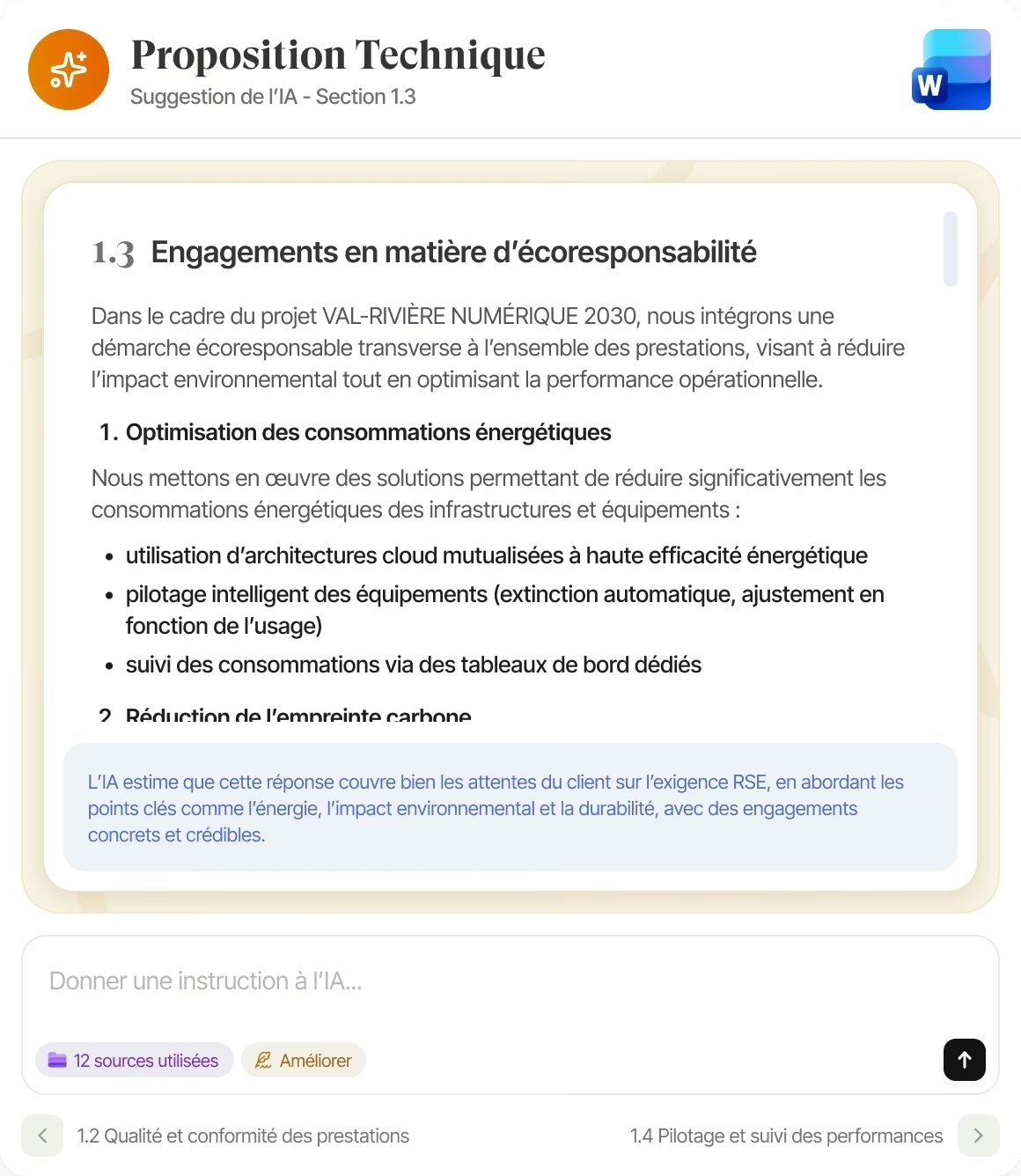
        Turn the blank page into a structured first draft tailored to the client's evaluation criteria. Tenderbolt generates each section from your knowledge base and your understanding of the client's needs, so your experts start from a solid V0, not from nothing.

          AI proposal drafting interface showing an environmental responsibility section with AI suggestions

          Coordinate contributors, reviewers and sign-off

          Assign every section to the right expert. Track who has reviewed what. Manage validation at every stage. No version chaos, no unanswered questions about where the dossier stands.

            Team coordinated on a tender response in Tenderbolt

            Check compliance before submission

            Review the response against the RFP requirements before submission. Contextualised answers grounded in the RFP documents and your response, before anything goes out.

              Respond to more RFPs, with better answers and less risk

              Tenderbolt handles the analysis, the sourcing and the structure. Your team handles the strategy and the expertise that wins.

              No hallucinations, no invented answers

              Every answer sourced from your documents. What is not there is flagged, not fabricated. In a scored RFP with penalty clauses, that distinction is the difference between winning and being disqualified.

              70% of the analysis and drafting time back

              The document analysis, the information hunt, the first draft: automated. Your presales team spends its time on the answers that need real expertise.

              A process that works without heroics

              Clear ownership, tracked progress, structured validation. The response does not depend on one expert being available at 11pm. It depends on a process that holds.

              [Client name or illustrative profile], [sector]

              Presales team responding to an RFP with Tenderbolt

              A software vendor's presales team was spending three full days on every major security questionnaire and RFP, chasing answers across old proposals and policy documents no one could find quickly. With Tenderbolt, their first draft is ready in hours, drawn entirely from their own knowledge base. Every answer traceable, every gap surfaced before submission. [Profile illustrative. Confirm real client and figures with Adrien. Right to publish with Hugues before go-live.]

              70%

              time saved per response

              x4

              velocity on responses

              +25%

              success rate

              Test it now

              Book a demo and see how Tenderbolt analyses a real RFP, sources every answer from your documents and surfaces every gap, live.

              Frequently Asked Questions

              Discover how Tenderbolt accelerates the entire tender response process with AI.

              RFx is a generic term for three formats used when an organisation consults its suppliers. An RFI (Request for Information) is an exploratory document sent early in the process to understand what is available in the market. An RFP (Request for Proposal) is the main procurement document: it asks suppliers to propose a full solution, including approach, team, references and pricing. An RFQ (Request for Quotation) is a pricing-focused document, asking suppliers to quote a price against a defined scope or product list. Tenderbolt covers all three.
              ChatGPT generates fluent text from its training data. It does not know what your company does, what certifications you hold, what your data policy says or what you have delivered for similar clients. Tenderbolt only answers from your own documents. When the source is incomplete, it flags a Partial Answer. When no source exists, it flags Unknown. Every answer is traceable. None are fabricated. In a scored RFP with penalty clauses, that is not a minor distinction.
              Word and PDF documents, Excel grids, questionnaire forms, security questionnaires, DDQs and functional specification grids. Any structured format where questions need to be answered from your knowledge base or where a proposal section needs to be drafted against the client’s requirements.
              Your documents are processed on infrastructure that meets EU data sovereignty requirements. Your data is not used to train any shared model and is not accessible to other organisations. Your knowledge base and your clients’ tender documents stay yours.
              Yes. DDQs and security questionnaires are often part of the broader RFP process, particularly in IT, finance and regulated sectors. Tenderbolt sources answers for these from your own security documentation, policies and certifications. The same traceability and flag logic applies: Partial Answer where the source is incomplete, Unknown where no source exists.